Articles on antiques and vintage
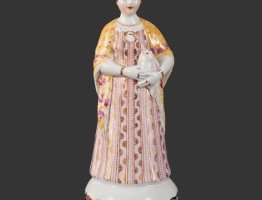
Is a Thing Worthy of a Collection
A hundred years of age is not a pass into a collection. An object can be genuine, beautifully preserved and at the same time completely ordinary: thousands like it were issued, and hundreds more stand on the shelves of other owners.
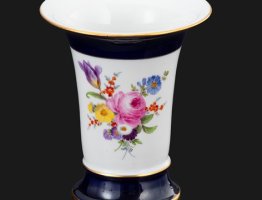
Attribution Without Myths
Old things accumulate stories faster than patina. The vase supposedly stood in a manor house. The service belonged to a famous family. The clocks were given to someone as a reward for service. The painting was bought even before the revolution.
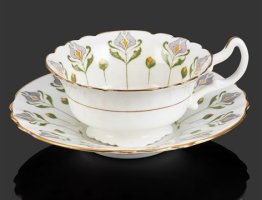
A Gallery or Buying from a Private Seller
Choosing an old thing almost never comes down to whether it speaks to your heart. Behind the object stands its age, its path through several hands, its present condition, traces of past repairs, lost and replaced parts, the maker’s marks and a biography of its own. All of this determines both the price and the very understanding of what exactly ends up with the new owner.
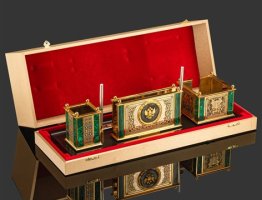
The Gift as a Cultural Gesture
A presented object exists in two dimensions at once. On one side it is a thing with a material, a size and a purpose. On the other it is a message: by it one judges how well the giver knows the recipient, whether he reads the situation, observes measure, and is guided by meaning or by the price tag.
Antiques and Family Memory
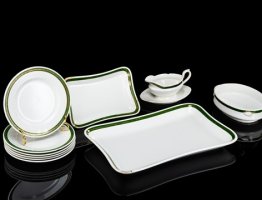
Some household objects change status over time: they cease to be utensils and pass into the category of witnesses. A writing desk, a porcelain cup, a wall clock, an icon, a silver implement, a casket or a framed photograph live in one house for decades, pass from the older generation to the younger and gradually grow together with the history of the family.
Antiques in the Interior: Original vs Copy
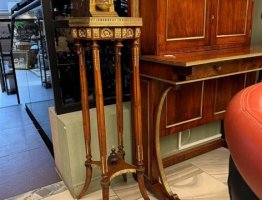
A modern project is not hard to bring to visual completeness: choose furniture in a single palette, add an aged mirror, a replica console, decorative bronze, a fabric with a historical pattern. Yet such a space often retains a whiff of the showroom window: everything is right, but too smooth.
Hallmarks on Silver: How to Read the History of an Object
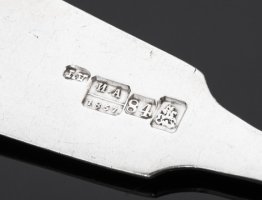
Pick up an old spoon, a sugar bowl or a tea glass holder and turn it towards the light: somewhere at the edge or on the reverse you will find several tiny impressions. A numeral, a pair of letters in a frame, a minuscule crest, a woman’s profile. To the owner these are “just marks”, usually not even noticed. To anyone who works with antique table silver professionally, they are where every investigation begins.
Antique Clocks as Objects of Culture
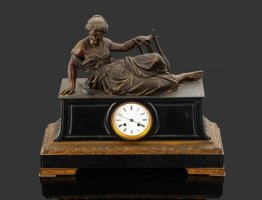
In an old study, clocks are felt before they are looked at. First comes the even running of the mechanism, then the strike that marks a quarter of an hour or noon. It changes the silence of the room and seems to remind you: time here is not hidden in a phone or on a screen, it is physically present.
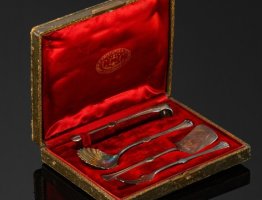
Antique Table Setting and the Rules of Etiquette
A large table, a white tablecloth, gleaming silver, porcelain, crystal goblets, small salt cellars, tongs, spoons of different sizes, dishes and stands. Today some of these objects seem almost mysterious: why so many implements, and why was special tableware created for particular foods?
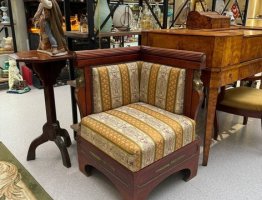
Antiques in a Modern Interior
Antiques in an interior often cause apprehension: put an old chest of drawers, armchair or mirror in a room, and the space will become too classical, or resemble a museum.
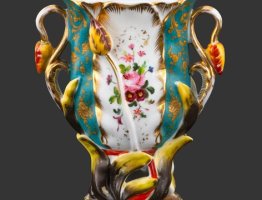
How to Assemble an Interior Collection
Five beautiful objects do not necessarily make a collection. Each of them may be expressive in itself: a rare vase, an old print, a bronze figurine, a mirror with a history. But placed together, they sometimes look as if they had met by accident.
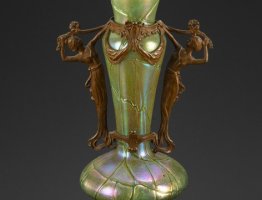
Five Materials That Are No Longer Produced
The value of an antique object is rarely reducible to age or the maker’s name. Often the main thing is the very substance: a composition that cannot be reproduced today at any price. Environmental conventions, exhausted deposits, lost recipes and extraction bans have closed the production of entire classes of raw materials, and everything made from them has become finite.
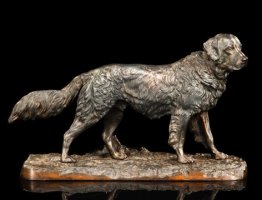
Hunting, Yachting, Golf: Antique Sporting and Leisure Decor in a Masculine Interior
A modern workspace or private study has long outgrown its purely utilitarian function. Minimalist desks, standard armchairs and basic shelving create a functional but impersonal setting. To fill an interior with character, strength and individuality, designers increasingly turn to the traditions of the closed gentlemen’s clubs of 19th and 20th-century Europe.
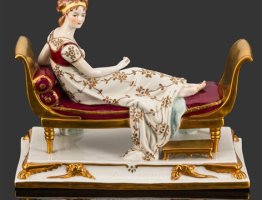
The Female Image in Porcelain, Bronze and Painting: From Salon Beauty to Soviet Sculpture
Place two figurines of the same size side by side. The first is a lady in a crinoline, her head slightly bowed, a fan in her lowered hand; gilding along the edge of the dress, fine overglaze painting of the face. The second is a woman worker in a headscarf, striding forward, her hands busy with her task, the painting restrained, without gold. Less than a century separates them; both are made of porcelain, both were issued by major manufactories. But these are statements not just of different eras; they are statements about different things.
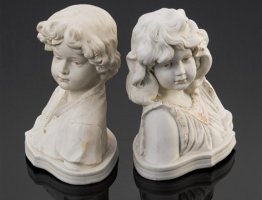
The Fine Line of Authenticity: Fakes, Stylisations and Late Reissues in the World of Antiques
The antique market is often compared to a labyrinth, where outwardly identical objects can have polar-opposite collectible and financial value. Two porcelain dishes with the same design, or a pair of bronze candlesticks, may look like twins to an amateur. Yet to a connoisseur, one object will turn out to be the rarest masterpiece of its era, and the other a skilful deception or a much later copy.
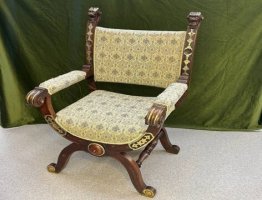
The Magic of Authenticity: Why Cinema, Theatre and Glossy Magazines Choose Genuine Antiques Instead of Props
In the era of ultra-high-definition screens, when 4K and 8K standards let viewers examine the tiniest details, hiding a deception in the frame has become practically impossible. A modern camera mercilessly exposes any falsity: the unnatural “lifeless” gleam of a plastic goblet, the too-even edges of imitation wood carving, the light weight of a prop gun. The modern viewer instantly reads these visual flaws, and the magic of trust in what happens on screen collapses.
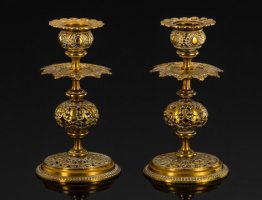
The Beginning of a New Dynasty: How to Choose a Valuable Wedding Gift at the Odnajdy Gallery
Wedding etiquette over the past years has been simplified almost to the limit: the overwhelming majority of guests confine themselves to an envelope of money. It is a convenient, predictable solution that spares you a long search. But let us admit the obvious: money is completely impersonal. A month later the newlyweds will hardly remember what exactly that sum was spent on, and the giver will remain a line in the general budget of the celebration.

Reading Between the Lines: What the Bookplates, Inscripts and Marginalia of Old Books Keep Silent About
Among beginning collectors and lovers of beautiful interiors there is a stereotype: the perfect antique volume should look as if it has just been carried out of a printing house of the century before last. Pages without a single spot, pristine flyleaves, no extraneous marks. Yet among seasoned bibliophiles and serious investors, the rules of the game look entirely different.
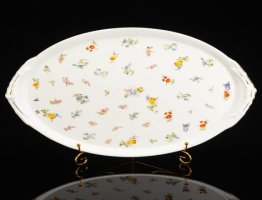
A Fragile Chronicle of History: How to Read Antique Porcelain
Porcelain is traditionally called “white gold”, valued for its delicacy, the purity of its material and its commercial worth. Yet for experienced collectors and art historians, an old cup or a fragile figurine is first and foremost an impeccable historical document. Porcelain responded incredibly sensitively to any change in the world: changes of rulers, economic crises, technological breakthroughs and revolutions.
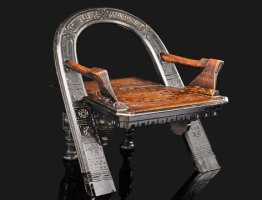
The Code of Identity: How the Russian Style in Antique Interiors Brings Back the Fashion for National Roots
Interior design today is undergoing a tectonic shift: the demand for individuality is replacing globalised minimalism and sterile Scandinavian style. The space a person lives in must be not only functional but also transmit their cultural identity, family history and national code.
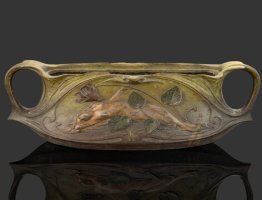
The Noble Grey of Time or a Commercial Marriage: Where Is the Line Between Patina and Damage to Antiques
The world of collecting and premium interior decor harbours an unspoken paradox: the perfect object is an object that bears the traces of time but has not been destroyed by it. When we pick up an antique, we look not for factory sterility but for a living biography. Yet sooner or later every collector and investor faces a fundamental question: where does the mesmerising charm of authenticity end and plain decrepitude begin, the kind that ruthlessly destroys the commercial value of a rarity?

The Biography of Things: Why Provenance Can Matter More Than the Antique Itself
A curious paradox exists on the global art market and among seasoned collectors. Imagine two absolutely identical porcelain cups made by the same manufactory in the early 19th century, or two matching silver cigarette cases. In terms of material, age and condition they are twins. Yet at auction one sells at the standard market price while the value of the other soars tenfold. What is the secret? The answer lies in a single weighty word that is spoken on the art market with particular reverence: [b]provenance[/b].

An Object as a Witness of Its Era: What Antique Things Tell Us About Everyday Life in the Past
The modern world is losing its sense of touch at breakneck speed. We have surrounded ourselves with sleek plastic, faceless composites and the endless screens of our smartphones. The objects around us have become functional yet ephemeral: they break easily, are quickly replaced by newer versions and leave no trace behind. They do not know how to remember.

A Noble Metal with a History: A Guide to Choosing Antique Silver as a Gift
Choosing a gift for a special occasion is always a search for balance between material value, impeccable taste and meaningfulness. In a world oversaturated with identical modern things, uniqueness and durability have become the true scarcities. That is why antique silver has held the status of an impeccable VIP present for several centuries.

The History of the Gift in Russia: From Ceremonial Silver to Desk Bronze
In Russian culture, a gift was never just a beautiful thing handed over on an occasion. It reflected a person's position, the family's taste, the measure of respect, the memory of an event and the subtle rules of communication between people. Through a gift one could express gratitude, strengthen kinship ties, mark service, bless a new home, emphasise merits or leave a kind memory of oneself. Eras changed, ways of life, forms of property and ideas of status, but the very idea of a significant gift remained remarkably stable: a good thing had not only to please but also to speak.

How to Start an Antique Collection: Tips for Beginners
Collecting antiques is often surrounded by myths. It seems to be a closed club for the chosen - art historians, museum experts and millionaires who know the catalogues of world auctions by heart. In fact, the path into this fascinating world begins much more simply: with sincere curiosity, a attentive eye and an inner response to a particular object. It could be an exquisite porcelain figurine, a rare pre-revolutionary book, a silver salt cellar or an atmospheric cityscape print that suddenly made you stop. At that moment the object ceases to be just a detail of the interior - the spirit of an era, the hand of a master and someone's vanished world begin to be glimpsed in it.

Floral Decor on Porcelain: A History of Flower Motifs
What is one of the most common subjects for decorating porcelain? What have artists depicted on porcelain since time immemorial? The answer is simple: floral motifs. Rarely has a human being truly managed to surpass nature in inventiveness, and for many centuries nature has served as an inexhaustible source of inspiration for artists and masters, craftsmen and architects all over the world. Today we would like to take a brief excursion into the world of painted flowers and introduce you to the history of this most popular subject of depiction.

Finnish Artistic Glass
Finnish design is popular all over the world thanks to its simplicity, versatility and functionality. Furniture, textiles, household objects - all of it is distinguished by practicality and closeness to the human being. The source of inspiration for the Finnish artistic industry was, as a rule, the local northern nature. This is especially noticeable in the example of artistic glass, a bright and original phenomenon.

Danish Pride. The History of the Royal Danish Manufactory
We continue our series of materials devoted to the history of various porcelain manufactories and factories. Today we will talk about a factory located in northern Europe that has been producing high-quality porcelain items for more than 250 years.

The Gutnaya Technique: Liquid Glass in the History of Soviet Decorative Applied Art
Today we will talk about an iconic glassmaking technique without which the history of Soviet glassmaking cannot be imagined, namely the gutnaya (hot-worked) technique, or free glass forming. The topic is, surprisingly, not studied in such detail.

Leningrad Artistic Glass Factory (LZHS)
The Leningrad Artistic Glass Factory (hereinafter LZHS) was not just one of the leading Soviet enterprises but a true centre of artistic glassmaking. The factory's products won awards at domestic and international exhibitions, served to decorate Soviet flats and were used in everyday life, and today they enter museum collections and enjoy great popularity with connoisseurs of artistic glass.

Imperial Glass Factory
From the early 18th century, St Petersburg became the main centre of Russian artistic glassmaking. Dozens of glassworks operated in the city itself and its environs, in particular the Yamburg and Zhabino glass factories. In 1730 both enterprises were handed over to the management of the English merchant William Elmsley, who later moved production to new factories: the glass-blowing works to the Lava River, and the finishing of finished pieces to the Fontanka River in St Petersburg. In 1738 the merchant died, the factory passed to the state treasury, and the entire production moved to St Petersburg. The factory worked on orders from the tsar's court and the nobility. Its products were mainly executed in the Baroque style. By decree of Empress Elizabeth Petrovna, in 1755 the fire-hazardous production was moved to the town of Yamburg, and in 1774 to the village of Nazya. At that time the pieces were adorned with engraving, a skill already mastered to perfection by Russian and invited European masters. The forms became lighter, and the Rococo style penetrated the decor. And thanks to the experiments of M. V. Lomonosov, who worked on recipes for coloured glass, the palette of the St Petersburg Glass Factory expanded. The scientist's efforts also led to the opening in 1753, in the village of Ust-Ruditsa, of a factory producing coloured smalt glass, which existed until 1765.

A Legend of French Porcelain: Jacob Petit's Turkish-Lady Flacon
Today we will talk about one of the brightest representatives of 19th-century European porcelain, the French master Jacob Petit (1796-1868) - or, in French, Jacob Petit (a literal translation would be "Little Jacob"). His works were highly appreciated by the French royal court, and under Alexander II his biscuit porcelain, that is, unpainted porcelain, was purchased from his factory for the Imperial Porcelain Factory, where Russian masters then enlivened it with paint.

A Figurine with an "Autograph": E. I. Gatilova's "Girl with Goslings"
If you are a lover of porcelain, especially Soviet porcelain, you have certainly heard the name of Yevgenia Ilyinichna Gatilova, People's Artist of Russia and one of the greatest Soviet sculptors. One of her teachers was A. A. Deineka himself, a key figure in the history of Soviet visual art, and her forte was exquisite small-scale sculpture: delightful porcelain figurines on a variety of subjects, depicting genre scenes, girls and children at various pursuits, animals...

The Unknown Side of Art: The Role of the Client
In the eyes of the public, the artist's profession is wrapped in a romantic halo. A person of art seems infinitely removed from mundane matters such as paying taxes, keeping financial accounts and household chores - all of that stays "off-screen". The viewer sees only the finished work, a painting or a sculpture, and almost never has any idea of what was invested in its creation. And here we mean not inspiration and creative searching, but the material resource.

Treasures of the VIP Room: "General Toptygin on a Troika"
Last time we examined in detail the coronation handkerchief of Nicholas II (link here), a genuine piece of history that miraculously survived the Soviet authorities, who fiercely and massively disposed of any artefacts even remotely connected with the tsar. And in another corner of the VIP room, through which we continue our stroll, we see a fairly large figurine with an interesting story, this time of the Soviet period.

A Walk Through the VIP Room. The Coronation Handkerchief of Nicholas II
I recently had the chance to visit the VIP room of the Odnajdy antique gallery. The name is telling: first of all, it refers to the kind of objects kept here - only the very best are on display. The rarest, the most valuable, the most interesting, and so on. Each deserves individual attention - one hardly knows which to stop at. Secondly, visitors are rarely admitted: an ordinary passer-by can practically never get into this room.

The Imperial Porcelain Factory in the Soviet Era: History of the GFZ and LFZ
In 1917, when the revolutionary whirlwind overturned Russia's fate, the Imperial Porcelain Factory, which for two centuries had created for the tsar's courts, found itself at the heart of change. Nationalised by the Bolsheviks, it shed its imperial title and acquired a new name - the State Porcelain Factory (GFZ). Under this banner it existed until 1925, and it was this brief, turbulent period that gave rise to a unique phenomenon: agitational porcelain, the brightest chapter in the chronicle of Russian art.

Imperial Porcelain Factory: From the Nevskaya Manufactory to Eternal Art
In the 18th century, when Europe, like an alchemist, sought the secret of snow-white porcelain, Russia reached for the dream. In 1744, by the will of Empress Elizabeth Petrovna, a passionate devotee of this art, the Nevskaya Porcelain Manufactory was born in St Petersburg - the third in Europe, a mere three decades younger than the renowned Meissen. From 1765 it acquired the proud name of the Imperial Porcelain Factory, which, like a banner, it carried through turbulent centuries, heedless of the changing eras and names.

The Imperial Porcelain Factory in the Soviet Era. History of the GFZ and LFZ
After the Bolshevik party came to power in 1917, the Imperial Porcelain Factory, which for almost two centuries had supplied porcelain wares almost exclusively to the tsar's family, was nationalised and given a new name: the State Porcelain Factory, or GFZ. Under this name it existed until 1925, and, brief as that period was, it coincided with the most important and fascinating chapter in the history of Russian porcelain: agitational porcelain.

Auction
On 18 April 2026 at 16:00 the Odnajdy antique gallery will hold an auction. The sale will feature 125 lots: Russian and European silver, rare porcelain and glass pieces, books, works on paper and much more.

Imperial Porcelain Factory
Throughout the 18th century, Western Europe was mastering the production of porcelain, and the Russian Empire was no exception. As early as 1744, here in St Petersburg, by decree of Empress Elizabeth Petrovna, herself a devotee of porcelain, the third European porcelain manufactory came into being - thirty-four years after the Meissen manufactory in Saxony, the very first in all of Europe. Its original name was the "Nevskaya Porcelain Manufactory", and from 1765 it became the familiar Imperial Porcelain Factory. The factory would change its name several more times in the years to come.

Lladro Figurines
The Spanish brand Lladro (pronounced "Yah-dro" in English) was born in 1953. It was founded by three brothers, José, Juan and Vicente Lladró, who at the time worked at a ceramics factory, in their family home in the Spanish province of Valencia. Initially the small manufactory produced various tableware - jugs, pots, vases - and in 1956 the production of figurines began, which became the hallmark of the rapidly growing company. In the 1960s it launched its international expansion, with demand for its wares growing across Europe, the Americas and Asia.

Meissen Porcelain Manufactory
In the second half of the 17th century, as trade flourished, Dutch and Portuguese ships carried a wave of curiosities from Asian countries to Western Europe, including Chinese goods such as silk, objects of ebony and rosewood, and jade. This gave rise in European art to a new movement: Orientalism, an interest in the culture of the East that found reflection in the visual arts as well. Undoubtedly, one of the most remarkable of all the rarities brought to Europe was Chinese porcelain, which immediately captivated the European aristocracy and thereby created a very significant chapter in European decorative art.

Works by N. P. Malevskaya-Malevich at the Odnajdy Gallery
What usually comes to mind at the mention of Soviet glass? As it happens, most people associate it with utilitarian household objects: decanters, salad bowls, goblets. More sophisticated connoisseurs of art will recall the original items of such enterprises as the Leningrad Factory of Art Glass, Krasny May, Neman and others. And only a few know that in Soviet times a distinctive and unique art school was born in Leningrad, which brought glass out of the realm of industrial production into the status of an independent art object.

Little Figurines Worth Hundreds of Thousands. Why Are Netsuke Loved?
At the end of 2022, at a Bonhams auction in New York, a wooden netsuke made in the 18th century went for 441,375 dollars. Presumably the statuette depicts Shokuin, the guardian spirit of Mount Se. Another record holder, in the form of the lion Karashishi, was sold for 210,000 pounds in 2011. In 2009, 185,000 dollars were paid for a netsuke signed by Himotoshi Otomon, 'The Battle of Watanabe no Tsuna and the Demon of Rashomon'. So what is it that makes these small figurines so attractive to collectors?

Unfading Flowers: Floral Motifs on Soviet Porcelain Services
The collection of the Odnajdy gallery presents dinner, tea and coffee services for every taste. But most often our buyers are interested in Soviet services with floral decor. We are glad to offer you such classic options as Siren (Lilac), Tsvetushchaya Kalina (Blooming Viburnum), Moi Sad (My Garden) and many others.

Are Film Cameras Back in Fashion?
Film cameras were indispensable throughout the 20th century, but in 1988 the Kodak company released the first digital camera, in which a sensor replaced film. A digital camera is quite simple to use; you can see the result at once, and there is no need to spend money on consumables. Film cameras faded into the background. They were sold at flea markets. They became inhabitants of the far shelves of cupboards and attics, gathering dust, only to be praised again by photo lovers decades later. Today prices for film cameras vary. More common and simple models can be found for 3,000 to 5,000 roubles. The cost of some reaches 100,000 to 200,000 roubles. Thus, for example, individual specimens by the Swedish manufacturer Hasselblad sell quite expensively, especially if they are in working condition. Why has film come back into fashion?

Dulevo Masters of Porcelain. Evgeniya Ilyinichna Gatilova. Inspired by Life.
Evgeniya Ilyinichna Gatilova (1921-2021) was a Soviet porcelain sculptor whose life and work largely determined the artistic face of the Dulevo porcelain factory. Her figurines devoted to Soviet life are distinguished by a high artistic level and a recognisable style, and therefore are exhibited in major state museums and adorn private collections.

The Drawing Set: A Symbol of Practical Art
A drawing set (gotovalnya) is a small set of drafting instruments, once obligatory in schools and higher education institutions, as well as in engineering and architectural work. Today it is encountered more rarely, displaced by computer programs for drafting and design, but it remains an important symbol of practical art. The key thing about this set is its precision and versatility: it allowed the creation of clear lines, arcs and complex figures. Some instruments acquired an almost legendary status; many remember how in childhood, holding their breath, they opened the set to see its contents.


